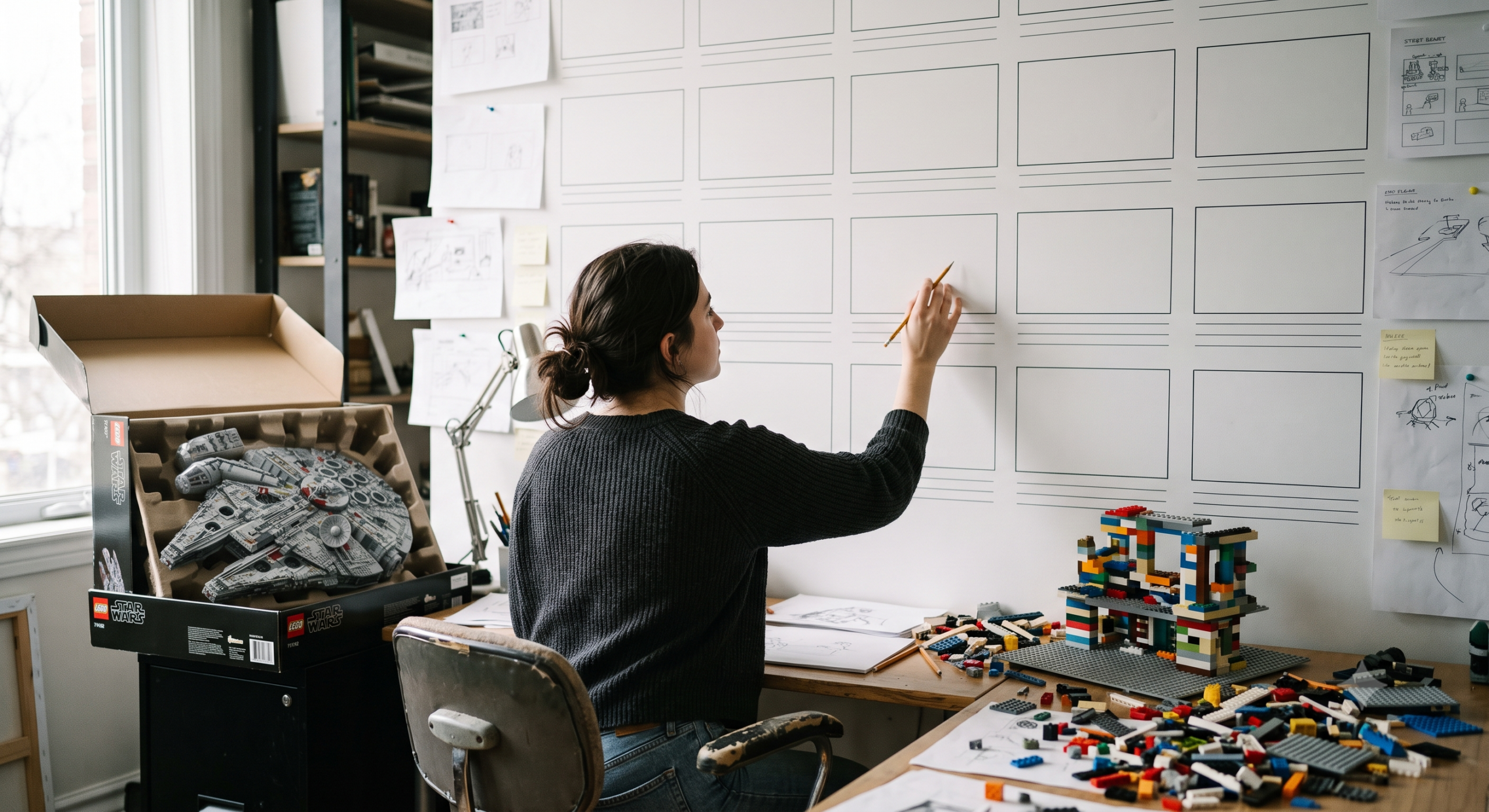
Seth Godin wrote recently about Lego. The company almost went bankrupt selling open bricks that could become anything. It was saved by kits with single outcomes. Follow the instructions, get the result. Godin called it industrial indoctrination in a box.
Now AI has arrived, and it is the best instruction follower in history. It can execute faster and more accurately than any human. This changes what an animator needs to be.
For years, animation education focused on technical mastery. You learned software, you memorized workflows, you followed the pipeline. That pipeline is now partially automated. The value has shifted upstream.
The animator who thrives today is the one who can answer questions the software cannot ask. Why does this character move this way? What are they hiding? What do they want? These are planning decisions. They require empathy, observation, and taste. They require you to think like a filmmaker, not an operator.
This does not mean technical skill is irrelevant. It means technical skill is now the entry fee, not the prize. The prize is creative judgment. The ability to look at a scene and know something is off, even when every frame is technically correct. The ability to hold a pose two frames longer because the silence matters more than the movement.
The Creative Animation program at Media Arts On Site is built around this reality. Students learn the tools, but the core work is making original creative choices and defending them. There are no kits. There is no single correct outcome. There is only the work, the feedback, and the revision.
If you want to follow instructions, there are faster ways to learn animation. If you want to learn how to draw the plan, this is where that starts.