Animation careers follow structured paths that are more predictable than many other creative fields. Understanding the entry points helps beginners focus their training and build relevant skills.
2D Animator
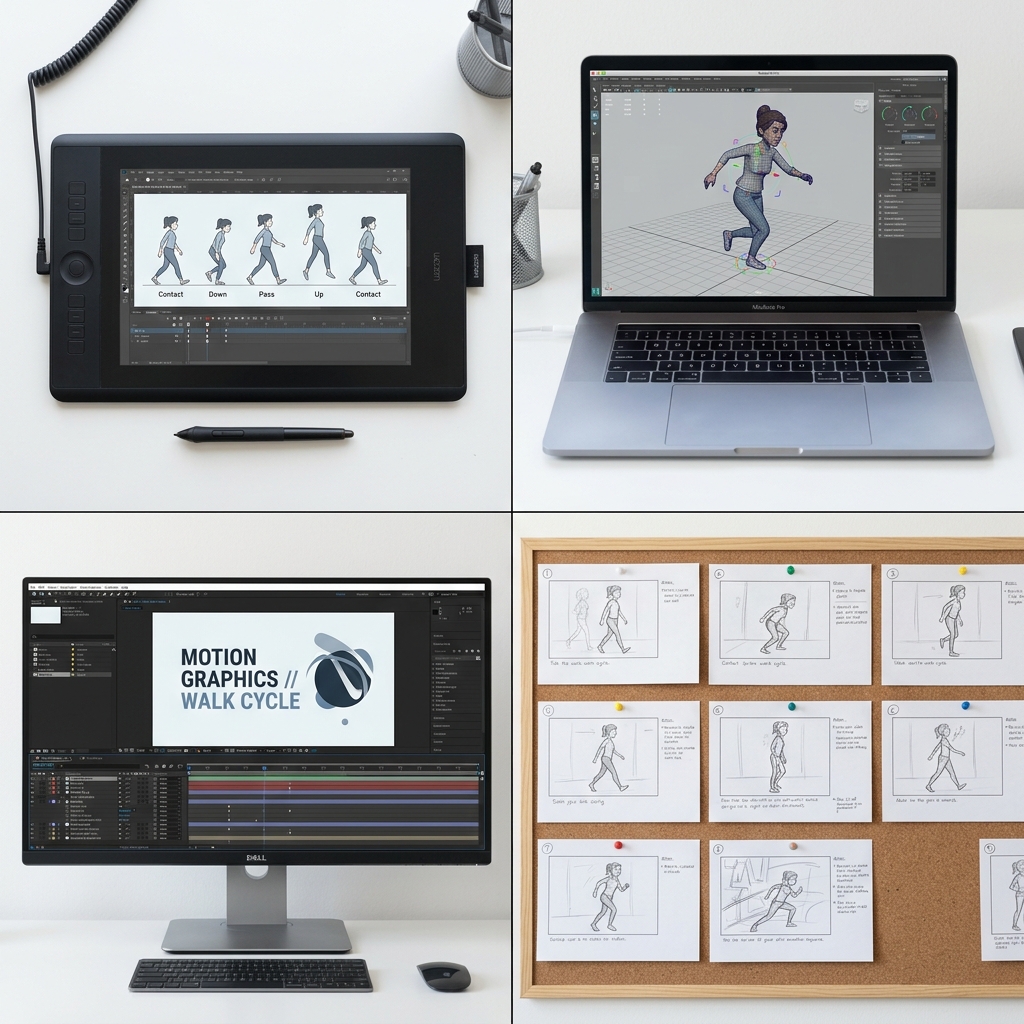
2D animators create movement using flat images, either frame by frame or with rigged digital puppets. This role remains in demand for television series, web content, advertising, and independent film.
Example: A junior 2D animator at a studio producing an animated web series might be responsible for animating background characters in crowd scenes, or completing inbetween frames for a senior animator’s key poses. Early work often involves cleanup and secondary motion rather than primary character acting.
Skills to develop: Drawing fundamentals, understanding of timing and spacing, proficiency in software such as Toon Boom Harmony, TVPaint, or After Effects.
3D Animator
3D animators manipulate digital models within virtual environments. This track leads into film, video games, virtual reality, and architectural visualization.
Example: An entry level 3D animator at a game studio might create idle animations for non player characters, or animate simple object interactions such as doors opening or weapons being picked up. These exercises build familiarity with rigging constraints and game engine requirements.
Skills to develop: Understanding of weight and physics, knowledge of 3D software such as Blender, Maya, or Cinema 4D, ability to work within technical constraints like frame budgets.
Motion Graphics Designer
Motion graphics combines animation principles with graphic design, typography, and video editing. This is often the fastest entry point for self taught animators.
Example: A junior motion designer at a marketing agency might animate logo reveals, data visualizations for corporate presentations, or short social media advertisements. Projects are typically shorter than film or game work, with faster turnaround times.
Skills to develop: Typography, color theory, composition, software proficiency in After Effects, Cinema 4D, and basic video editing tools.
Storyboard Artist
Storyboard artists draw sequential panels that plan camera angles, timing, and character blocking before animation production begins. This role requires strong drawing skills and cinematic thinking.
Example: An entry level storyboard revisionist at an animation studio might clean up rough sketches from senior artists, adjust panels to match script changes, or draw additional shots to fill gaps in existing sequences.
Skills to develop: Perspective drawing, understanding of camera language, ability to convey action and emotion through static images.
How These Paths Connect
The foundational skills are transferable across all four roles. A 2D animator who understands timing and weight can transition into 3D animation with software training. A motion graphics designer who learns character rigging can move into game animation. Many professionals shift tracks mid career as industry demand changes.
Beginners are advised to choose one entry point, master the core principles, and remain open to lateral moves as experience grows. Ready to start your animation career?