
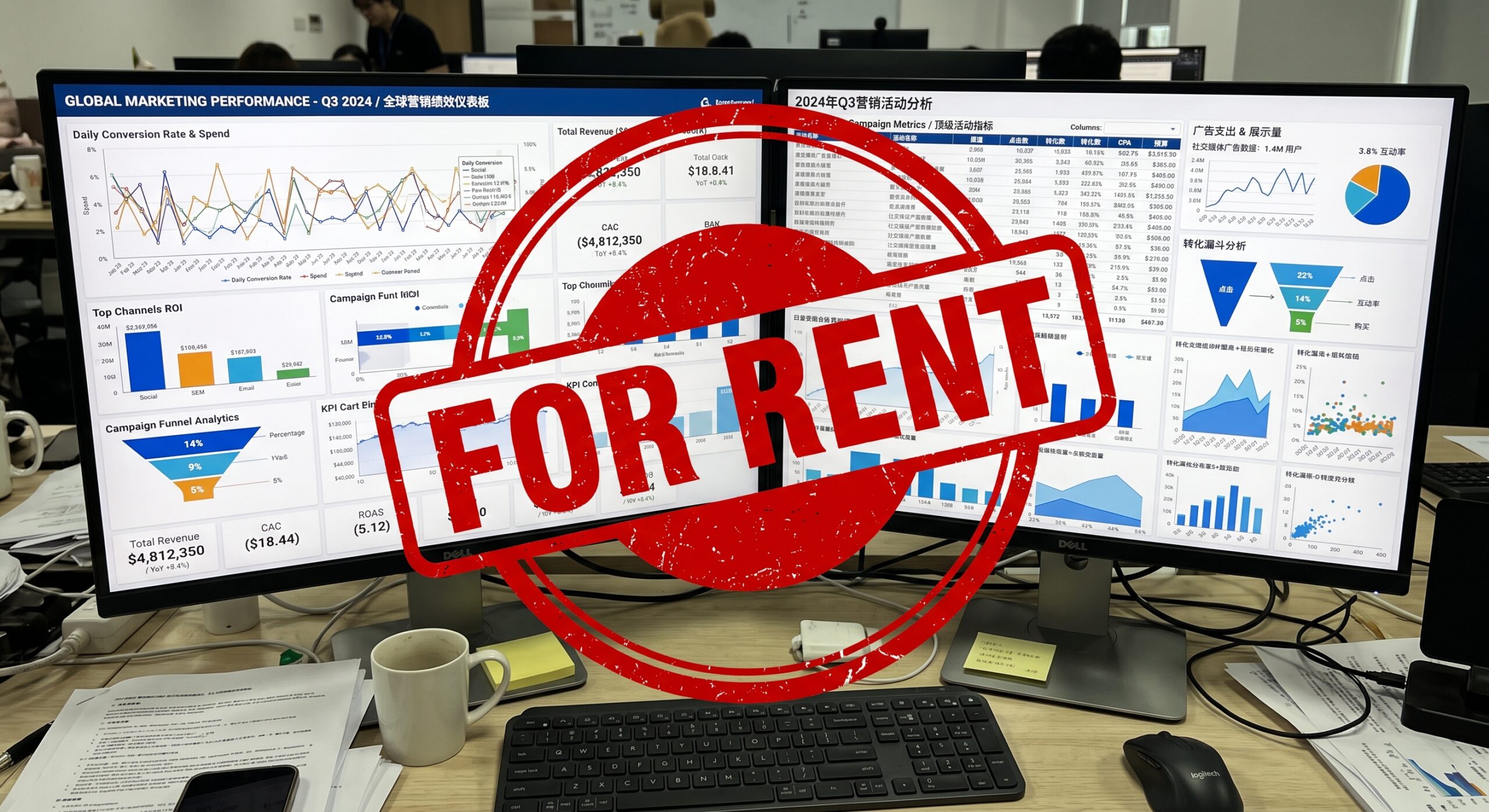
Hiring a marketing agency or a freelance social media manager is a valid choice for many businesses. But it helps to know exactly what you are buying, what you are not buying, and what happens when that relationship ends.
If you run a small business, you have probably received a proposal or two. The numbers vary by city and by scope, but a typical small business might spend between one thousand and five thousand dollars per month on outsourced social media management. That usually includes content creation, scheduling, and basic reporting. It does not usually include strategy development, video production, paid ad management, or crisis response. Those cost extra.
Over the course of a year, that is a significant line item. For some businesses, it is the right investment. For others, it is money spent without a clear understanding of what is being done or why.
What You Own and What You Rent
When you hire an agency, you are renting expertise. You get the benefit of their experience, their tools, and their team. What you often do not get is a transferable record of how your marketing works.
If the agency writes your blog posts, designs your graphics, and manages your ad accounts, they may do excellent work. But the knowledge of why those posts performed well, which audiences responded, and how the ads were structured often lives in the agency’s files, not yours. If the relationship ends, that knowledge walks out the door with them.
Many business owners discover this only after a transition. They switch agencies or bring marketing in-house and realize they have no documentation of what was tested, what failed, and what succeeded. They are starting from scratch, sometimes with a sizable audience they no longer know how to speak to.
The Middle Ground: Understanding Before You Delegate
Learning to manage your own marketing does not mean you must stop outsourcing. It means you can hire with discernment. You understand the language of digital marketing well enough to evaluate the work you are paying for. You can read a report and know which numbers matter. You can look at a proposed campaign and ask the right questions. You can step in during a gap between agencies without your online presence going silent.
This is a different position than simply delegating and hoping. It is the difference between owning a car and knowing how to change a tire. You may still call a mechanic for major work, but you are not stranded on the side of the road.
For many small business owners, a short period of focused learning creates years of better decision-making. The cost of that learning is often a fraction of one year of typical agency fees. The skills do not expire when a contract ends.
How to Evaluate Whether to Outsource, Learn, or Both
There is no universal right answer. The right choice depends on your time, your budget, and your temperament. But there is a useful way to think about it.
If you have more money than time and your marketing needs are complex, outsourcing makes sense. Hire well, insist on transparency, and ask for documentation of strategy and results. Treat the agency as a partner, not a black box.
If you have more time than money, or if your business is new and your marketing needs are simple, learning the basics yourself may be the better path. You will build an intuition for what works in your specific market. You will own your content and your data from day one. When you do eventually hire help, you will know what to ask for.
If you are somewhere in between, a hybrid approach often works best. Learn enough to set strategy and evaluate work. Outsource execution for the tasks that drain you or fall outside your skills. Review the results together. Over time, you may bring more in-house or you may expand what you delegate. Either way, the decision is informed.
The Hidden Cost of Not Knowing
There is a cost to ignorance that does not show up on a spreadsheet. It is the cost of approving a campaign that sounds impressive but targets the wrong audience. It is the cost of paying for reports you do not understand. It is the cost of missing a simple fix because no one explained it to you.
When you understand the basics of digital marketing, you protect yourself from these hidden costs. You can spot when a proposal is padded with unnecessary services. You can recognize when a metric is being used to obscure poor performance. You can say no with confidence and yes with clarity.
These protections are valuable whether you manage your marketing yourself or hire someone else to do it. The knowledge is the insurance policy.
A Practical Starting Point
If you are considering whether to learn more about digital marketing, start with one channel. Pick the platform where your customers already are. Spend two weeks learning how it works: how the algorithm surfaces content, what formats perform best, how to read the analytics. Do not try to master everything at once. One channel, understood well, teaches you more than five channels understood shallowly.
Once you see how one platform behaves, the others become easier to learn. The principles transfer. You begin to see patterns: what earns attention, what builds trust, what drives action. Those patterns are the foundation of every marketing decision you will make, whether you execute it yourself or delegate it to someone else.