When people think about working in the animation industry, they usually focus on three main jobs: animator, modeler, or director. They dream of working exclusively at giant studios like Disney, Pixar, or DreamWorks.
The truth is that the animation pipeline is massive, and schools rarely teach students about the dozens of other incredible career paths available. Whether you are looking for a stepping stone to your dream role or want to find a creative career that fits a unique skill set, hidden opportunities exist across the industry.
Here are 10 valuable, lesser known jobs in feature animation that you should consider.
1. Pre-visualization (Previz)
Before a movie goes into final production, the entire film is often built in a rough, 3D format. This is previz. Artists use proxy assets and temporary voices to test out scenes. This allows the director to make big creative decisions early, saving millions of dollars in final production.
Previz also opens the door to related fields:
- Techviz: Analyzing the data from the virtual camera to figure out real world logistics, like camera lenses, focal lengths, crane sizes, and green screen distance.
- Postviz: Merging real live action footage back into the rough 3D pre-visualization setup to see if everything aligns.
If you have a broad, generalist skill set (a little bit of modeling, animation, lighting, and rendering), previz is a fantastic place to wear many hats.
2. Production Assistant or Coordinator
Every studio needs a team to bridge the gap between the creative artists and the business overhead. Production assistants (PAs) and production coordinators are the ultimate artist wranglers.
If you are highly organized, love logistics, excel at scheduling, and enjoy managing people, the production path is essential. A producer is at the top of this chain. Many creatives use a PA role as a foot in the door to learn how a studio operates before moving into art departments, while others fall in love with the production management side and stay long term.
3. Character Effects (CFX)
Once a character is animated, the CFX department steps in. CFX artists handle the simulation of hair, fur, cloth, and props. They make sure clothing moves naturally with a character’s body and that environmental elements interact properly with the cast. This role requires a balance of artistic eye and technical problem solving, often involving simulation software and a deep understanding of physics.
4. Audio Engineer
Animation cannot come to life without sound. Audio engineers work in the recording studio with voice actors, preparing the dialogue tracks that animators rely on to match mouth shapes and emotional beats. They also manage sound levels, sound effects, and clean up audio files so they can be integrated smoothly into the visual animatics.
5. Crowds and Cycles
Not every animator works on the main characters. Big feature films require massive crowds of background characters, like a stadium full of cheering fans or a busy city street.
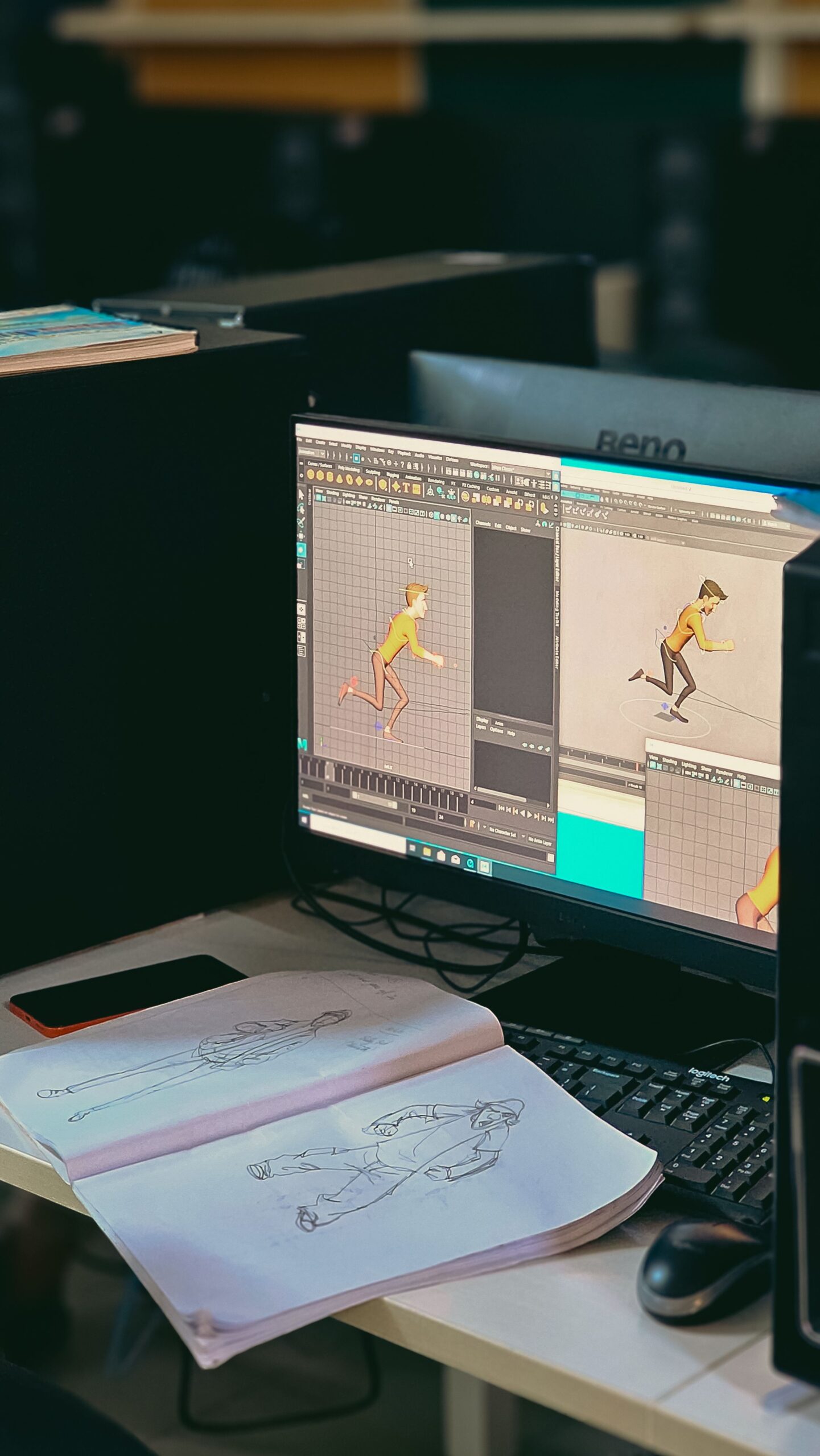
Crowds and cycles artists focus on creating loopable animations (walk cycles, runs, cheers) and then use technical software or artificial intelligence tools to procedurally apply those movements to hundreds of background assets. If you have experience making animation cycles for video games, this department is an excellent bridge into feature films.
6. Matte Painting
Everything you see on screen must be created, but modeling an entire world in full 3D would destroy render times. Matte painters handle the distant background elements that sit behind the 3D sets. They paint the sweeping mountain ranges, distant skylines, and cloudscapes that give a film its sense of scale, combining traditional painting skills with modern digital tools.
7. Compositing
A studio never renders a final movie frame all at once. Instead, they render the characters, background elements, lighting layers, and visual effects separately. Compositors take all these individual pieces and blend them together into the final image. They dial in the shadows, adjust the color grading, and ensure that the final product looks like a cohesive, beautiful film.
8. Image Finaling (IMF)
Even with the best technology, 3D rendering can result in weird glitches, fuzziness, or clipping artifacts where things render in the wrong order. Rather than spending days re-rendering an entire sequence to fix a minor bug, the Image Finaling department uses software like Photoshop to manually fix individual frames. They use a bit of digital movie magic to polish out visual errors before the film hits theaters.
9. Technical Director (TD)
The definition of a TD changes depending on the studio, but they are completely essential. TDs are the technical backbone of production.
- Department TDs build customized tools and plugins to help specific groups, like animators or modelers, do their jobs faster.
- Pipeline TDs focus on data transfer, making sure files do not break when moving from one department to the next.
If you love computer science, coding, and solving complex technical riddles, a TD track allows you to build the tools and render engines that define the look of modern cinema.
10. Production Training
Large animation studios frequently have internal training departments to teach new hires how to use proprietary studio tools, software, and workflows. Technical training specialists are experienced professionals who enjoy teaching, creating tutorials, and helping artists update their skills as studio technology evolves.
Expand Your Skill Set
If you are struggling to land that one hyper competitive job at a massive studio, look at the pipeline as a whole. Do not limit yourself to just one track before you even get into the industry. Stop by the studios to discuss your next steps.