How to practice the invisible work that separates motion from meaning
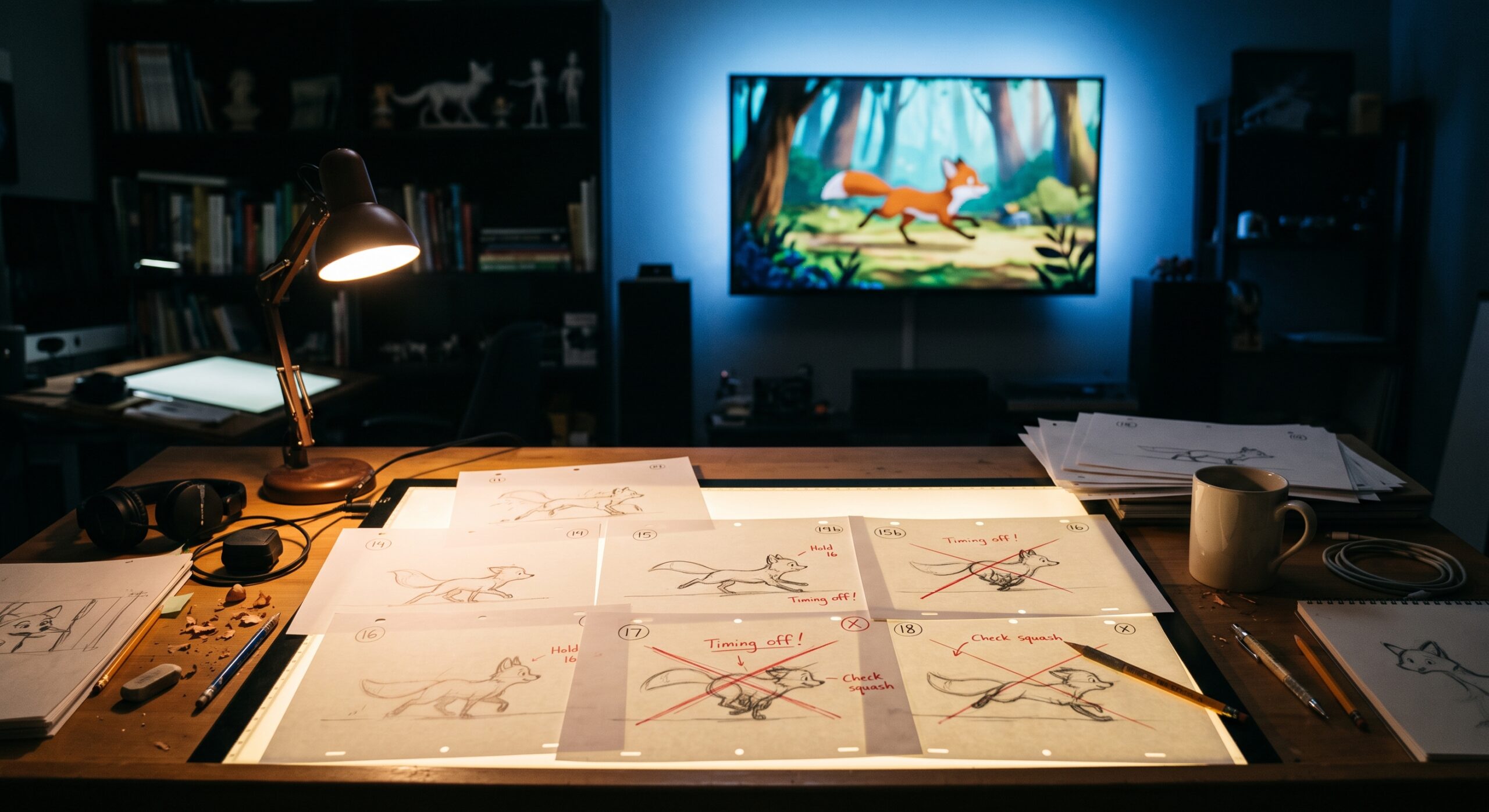
Every animation tutorial shows you the polished final pass. The clean lines, the perfect arcs, the smooth motion. What they almost never show is the part that matters most: the hours of watching real people move, the failed attempts at a gesture, the decision to hold a frame for one extra beat because something felt thin.
That invisible work is where animation becomes art. Software makes the visible part faster. It does not make the invisible part easier. In fact, it can trick you into skipping it entirely.
How to Practice the Invisible Work
Observation Without Drawing Spend twenty minutes in a public space watching one person. Do not sketch. Just notice: how they shift weight, where their eyes go, what their hands do when they are not the focus. The goal is not to capture. It is to see.
The Failed Gesture Pick a simple action: reaching for a cup, turning to look over a shoulder. Animate it five times. Each version should fail for a different reason. Too fast, too slow, too even, too stiff, too loose. The failure teaches you more than the first correct attempt.
The Hold Test Take a finished piece of animation. Find a moment of action and insert a two-frame hold. Then four. Then eight. Notice how each length changes what the audience feels. The hold is not empty space. It is the character thinking.
Revision Log Keep a written record of every major revision you make. Not what you changed, but why. Over time, you will see patterns in your own judgment. That awareness is the skill.
Silent Study Watch a scene from a film you admire with the sound off. Write down every moment where a character is still. Describe what that stillness communicates. Then try to recreate one of those moments in your own work.
Start putting it in practice today. You’ll notice how your animation turns from frames into a breathing story.