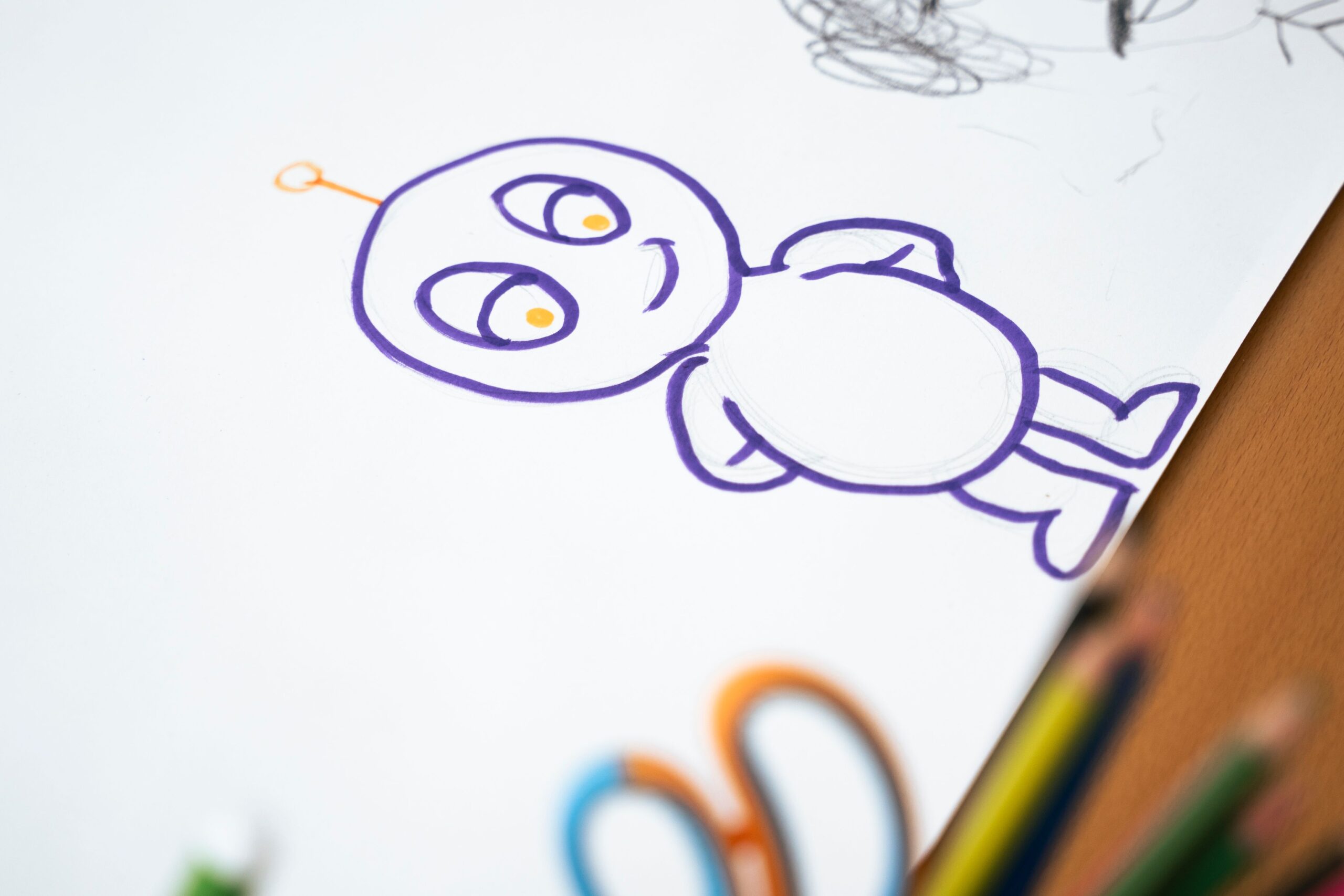
Here is the fear that stops more people than anything else: I am not artistic enough.
If that thought has ever crossed your mind, you are not alone. It is the single biggest reason talented, curious people never sign up for animation school. They picture a room full of prodigies who sketched masterpieces at age five and assume there is no seat at the table for a beginner.
Let me be direct: that picture is wrong.
Animation is not a talent you are born with. It is a skill you build, step by step, with the right tools and the right guidance. Our Creative Animation program was designed specifically for people who are fascinated by movement and storytelling but have little to no formal art background.
Myth #1: You Need to Be a Great Drawer
You do not. Modern animation lives inside software. While traditional drawing helps, it is no longer the gatekeeper it once was. In our program, you will learn how to use industry-standard tools to build characters, rig models, and bring scenes to life. The computer does the heavy lifting on precision. Your job is to bring the ideas.
Myth #2: Animation Is Only for the Young
Our students range from recent high school graduates to professionals in their forties making a career pivot. One of our most successful graduates was a former accountant who had not picked up a pencil for fun in two decades. She now works in motion graphics. Age is not a prerequisite. Curiosity is.
Myth #3: You Need Years of School
Our program runs just 12 weeks. Two evenings a week. That is it. We focus on intensive, hands-on training because we know your time is valuable. You will not spend a semester on theory. You will start making things in week one.
What You Actually Need
- A willingness to learn. If you can follow a tutorial and not panic when a button is in a different place than expected, you are ready.
- Patience with yourself. Your first walk cycle will look awkward. Everyone’s does. The pros you admire on YouTube have folders full of terrible first attempts.
- A computer and internet access. That is the full equipment list.
What the Program Covers
We start with the absolute basics: understanding frames, timing, and spacing. From there, you move into 2D animation fundamentals before transitioning into 3D workflows. By the final weeks, you will be working on a short portfolio piece that demonstrates real skills to potential employers or clients.
No portfolio is required to apply. No art degree. No secret handshake.
Your Story Does Not Need to Start with a Pencil
It needs to start with a decision. If you have been telling yourself that animation is for other people, it is time to stop.